I started The Coming Storm by Regina M. Hansen not knowing what to expect. I had read only a brief, enigmatic description of the plot and seen an image of the gorgeous cover art. Reading the opening scene soon assured me of Hansen’s talent. She accomplishes a great deal quickly without making the prose or plot too caught up in exposition. She introduces her protagonist and one of many narrators, Beet MacNeill, as well as some of her family while executing major plot points that will reverberate throughout the book. Hansen clearly knew her story intimately and had planned its opening with exceptional care.
This attention to detail and elegant construction of plot remains consistent throughout the novel. The story progresses along two timelines, one moving forward in time in 1950 and one moving ever further back in time, even to pre-historic human history. While in the 1950 timeline Hansen switches between established character narrators, in the past timeline many of the narrators are tangentially connected to her primary characters or even one-off characters we never encounter again after their narration concludes. Hansen handles these techniques admirably, keeping the focus of the past timeline more on plot events and establishing a pattern of supernatural occurrences than on the narrators themselves. Hansen clearly trusts the intelligence of her readers in order to be able to connect the dots between the pattern established in the past and ongoing events in the 1950 timeline. My one complaint about these timelines was that were one or two too many repetitions in the past timeline that did not contribute much to the supernatural mythology with which Hansen was working because the events had already been depicted several times.
In addition to the well-planned structure, I loved Hansen’s ability to blend her historical setting of Prince Edward Island with the mythology of the sea and the Scotch heritage of some of the island’s inhabitants. So many YA novels are either realism or fantasy that The Coming Storm’s use of both genres felt fresh and innovative.
Photo courtesy The Canadian Encyclopedia
Finally, Hansen’s writing style and characters offer ample reading incentive of their own. The characters of Beet’s world are a delight. They range from her supernatural-story loving best friend (how convenient for a posse attempting to fight demonic influences 😊), the town’s otherworldly librarian, and a boy visiting from Boston for the summer. What’s more, Beet’s love of music and the sea are expressed through gorgeous prose describing these passions.
If your last literary visit to Prince Edward Island was reading Anne of Green Gables or one of its sequels, it’s time to return and see it afresh through The Coming Storm.
Finding myself with some extra time on my hands, I sat down to write and . . . didn’t really know what to say. Offering pop culture reviews or recommendations just felt too insignificant in light of everything happening with COVID-19. After the first week of quarantine, though, I noticed how much I enjoyed seeing everyone’s lists of what they’re distracting themselves with right now.
So, in that spirit, (with a smidge of “what else do I have going on right now?” thrown in) below are some podcasts I enjoyed over the past week.
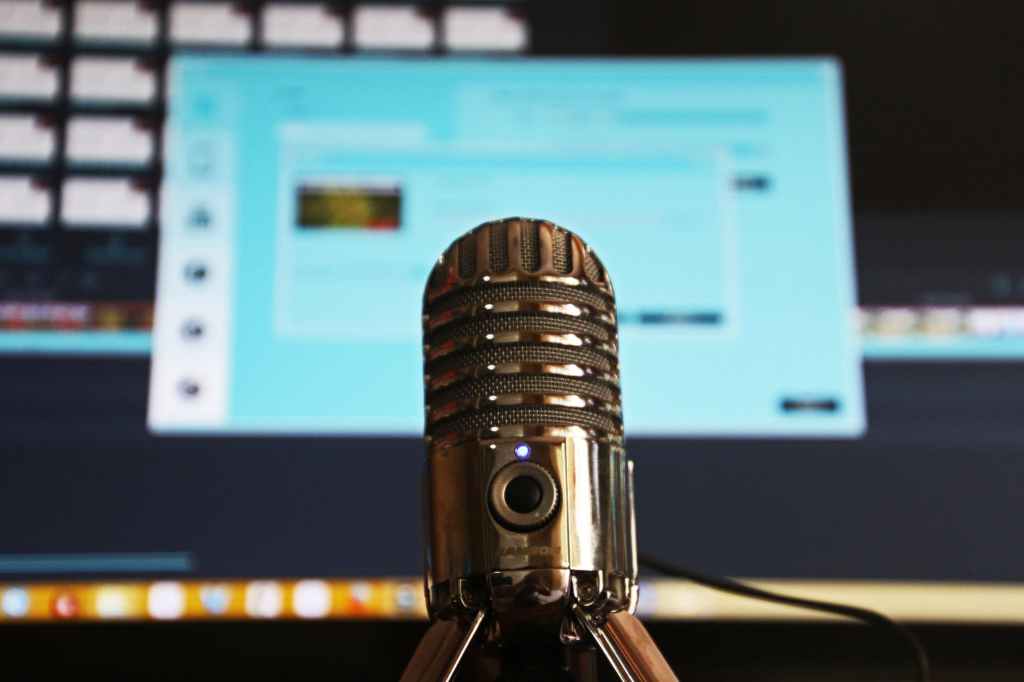
In times of stress I try to avoid being alone with my thoughts too much. Having a funny, reassuring, or just different, voice can help minimize anxious spiraling thoughts. Podcasts are excellent for adding another voice in your head because you can multitask while listening and the blessing of headphones means you don’t have to subject other members of your quarantine posse to your listening choices.
Staying In is made directly in response to COVID-19 but is done so with humor and rationality as opposed to abject panic (deep breaths, everyone). In addition, money raised by the podcast’s ads will help those impacted by COVID-19. Kumail Nanjiani is a comedian and actor and, his wife, Emily V. Gordon is a former therapist and writer. (They co-wrote the film The Big Sick and Nanjiani starred in it.) The podcast gives advice and coping mechanisms for working from home and quarantining with loved ones (both things the couple has experience with as they explain in the first episode). I’ve always enjoyed this couple’s sense of humor and their tips, coupled with a warm and funny tone, delighted me.
Unlocking Us with Brené Brown
Unlocking Us was supposed to launch at South by Southwest last week but, luckily, is still being released on podcast streaming apps. Brené Brown is a research professor who reached mainstream audiences with books like Rising Strong and Braving the Wilderness as well as her TED Talk on vulnerability.
In the podcast, Brown plans to “reflect the universal experiences of being human, from the bravest to the most brokenhearted.” Her first episode is just Brown talking directly to the audience (although it seems most episodes will feature interviews). The first episode also reflects on COVID-19, but puts it within the framework of how scary and vulnerable it is to experience something for the first time. What I love about Brown’s work is that she explains concepts she’s learned through research and then illustrates them with interesting, funny stories from her own life. Although overall more serious than Staying In, Unlocking Us provides ideas you can dig into and potentially use to navigate the weird days we’re currently experiencing.
I Said No Gifts!
Comedian Bridger Winegar hosts a conversation between himself and another comedian based on the (faux) premise that he’s forbidden them to bring a gift. Inevitably, (at least in the two episodes currently available) the guest does bring a gift which Winegar unwraps and they discuss. They also answer listeners’ gift-related questions. This podcast is much more ramble-y than Unlocking Us (particularly because the gift talk and questions only constitutes about fifty percent of the run time) so if you prefer a more structured conversation this may not be for you. However, I found both episodes to be laugh out loud, entertaining distractions.
What’s got you distracted in a good way this week?
Growing up, I did not have cable television (except for when my family stayed in hotels). So the advent of Fall TV meant that there were actually new shows to watch on television every evening of the week (and not just on PBS)! Now we live in a blessed age where approximately three shows a day drop onto streaming platforms and even broadcast networks have started programming more seasonal offerings outside of the traditional September to May schedule. The result is that we’ll all likely have ten shows still on our watch lists when we ascend to the Great Big Couch in the Sky. As an avowed pop culture addict, I wouldn’t choose to live any other way. Still, I look forward every year to seeing what new offerings network television has to offer, creating a schedule of what I want to check out, and determining what I’m willing to commit to (at least for a few more weeks).
Admittedly, there were not a huge amount of shows that
intrigued me enough to watch even the pilot this year. (Optimist’s Translation:
more time to watch streaming shows as they drop throughout the fall and
winter.) That being said, I test drove the police procedural Prodigal Son
that premiered last week.
The premise of Prodigal Son is that Malcom
Bright (Tom Payne) is both a criminal profiler and the son of Dr. Martin Whitly
(Michael Sheen), a serial killer known as the Surgeon who was captured and
incarcerated in the late 1990s. The pilot episode sees Bright working as a
consultant to an NYPD case only to discover that the case is a copycat of four
murders his father committed years ago.
Familiar territory? Yes, and that is one of the show’s
biggest potential pitfalls. A detective/profiler/forensic pathologist with a
personal connection to a killer/landmark case/crime is a trope mystery lovers
have seen before in television, movies, and books. However, the police
procedural format as a whole is not particularly new either and that doesn’t
stop viewers from enjoying interesting characters and unusual cases. More
episodes should help shed light on whether the writers are able to find new
perspectives on these tropes or fail to make them work with these characters
and within the particular environment they’ve created in Prodigal Son.
My other biggest concern with this show is that it too
often uses shock factor to elicit viewers’ emotion rather than relying on the strength
of the writing and acting without layering on gore. For example, the show’s
opening scene depicts Bright entering a butchering process plant that has a
series of severed heads preserved in jars in the background. Obviously, that is
a horrifying concept. However, on screen I couldn’t help but think they looked
like cheap Halloween masks in jars filled with goop. It certainly didn’t scare
me; it just seemed hokey. Similarly, later, the director uses a tight closeup
of Bright’s face screaming, eyes bugged out, after he has a nightmare about his
father. This kind of in-your-face, “isn’t this scaaary?” tactic definitely
backfired for me (and I’d wager for many other viewers as well). Rather than
letting the storytelling and filmmaking stand on its own in evoking reactions
from viewers it seems like the creators are smashing the “break open only in
case of emergency” toolbox too frequently.
The show’s house style is fairly stark, relying on
low-key lighting and heavy shadows and filters that seem to leach almost all
color from the screen. A very minimalist color palette of creams, grays, and
blacks only enhances this effect. Many shots also used shallow focus, meaning
only part of the image is in focus and the rest remains blurry. To be fair, this
cinematographic choice may be trying to illustrate how much viewers don’t know.
We only know a little bit of the history between Bright and his dad and we know
about it primarily from Bright’s perspective. However, I found the frequent use
of shallow focus a bit distracting because it was so pervasive.
Now, what I really liked about the show were the
actors and performances. Michael Sheen’s Dr. Whitly/Surgeon was truly creepy
and seemed to hint at layers of characterization that will (hopefully) develop
over the course of the season. The show also did a good job of using him enough
to establish his backstory and relationship with Bright without letting him
overly dominate the story.
In addition, there are a trio of treasures playing
supporting characters that I hope to see more of in the coming weeks. First, certified
National Treasure Lou Diamond Phillips plays Gil Arroyo, an NYPD cop with a connection
to Bright that’s explained at the end of the pilot. We don’t learn much about
his character in the pilot other than his trust in Bright but I always enjoy
Phillips. He also serves as a more grounded character compared to the
heightened Bright and Whitly and their strange father-son relationship. Second,
the show features Gilmore Girls treasure Keiko Agena who played Lane in
the beloved coming-of-age series. Here, she’s Dr. Edrisa Tanaka, a forensic
pathologist who nervously geeks out over identifying wounds with Bright,
injecting a nice bit of comedy into an otherwise grim show. Finally, Scandal
treasure Bellamy Young, who played Mellie Grant in the political drama, now
plays Jessica Whitly, the mother of Malcom Bright and wife of serial killer
Malcolm Whitly. In the pilot she appears like an aristocratic society mother,
almost as if Edith Wharton’s matriarchs were revamped for the 21st
century. Still, Young’s performance hints at the trauma below the character’s
shiny superficiality and I hope the show will explore that as it progresses.
Verdict: I’m not yet ready to hit the “record series”
button on my DVR. However, I was intrigued enough by the setup and the actors
to keep watching for several more weeks to see how the story develops.
I fan girl hard for Lisa Lutz. Reading her Spellman Files series (about a family of private detectives who are always tailing or phone tapping at least one other family member) was a treat I reserved for special reading occasions, like after I finished an onerous task, and I put off reading the final novel in the series because I did not want it to end. In fact, I adore Lutz’s work so much that she’s one of the writers whose names I frequently search on bookselling websites, social media, and her own author website so as to know exactly when her next novel will be released. Needless to say, I have been anxiously awaiting the release of her most recent novel, The Swallows.
For fellow Lutzites (Lutzians? Lutz Loons?), the
archetypes of her previous novels are still present in her new novel:
dysfunctional parents, witty women who somehow still don’t have their life put
together, precocious teen girls who are almost too smart for their own
good, and lovable male allies who prove to be dependable sidekicks for the
female protagonists. While the characters feel consistent with others in Lutz’s
fictional universe, the story itself is quite a bit darker than the beloved Spellman
series.
In The Swallows, set at Stonebridge (a less
than prestigious boarding school in Vermont), Lutz depicts a level of scumbaggery
heretofore unseen in her other works. The novel’s conflicts center on a series
of sexual scandals (some at other schools and in the past as well as at
Stonebridge) that, once uncovered, spiral into tragic and disturbing
consequences for everyone involved.
Set in 2009, The Swallows focuses on a pre-#MeToo
era but one which is no less filled with predators and prey as well as
drastically inequal power dynamics. Smartly, Lutz does not divide the heroes and
villains neatly along gender lines nor between faculty/staff and students. The
spiral of abuse and retaliation becomes increasingly messy as more about the scandals
are uncovered. As a former teacher, I found the corrupt and enabling school
administration and teachers extremely unsettling (and that is due to Lutz’s
skill in depicting these characters and showing their flaws). This is not a feel-good
story and it is to Lutz’s credit that it is not. In fact, the overarching
metaphor for the book is one of war with section titles such as “Allies,” “The
Army,” and quotes from the likes of Winston Churchill and Sun Tzu prefacing
each section. Ultimately, I read the book not as offering solutions to the abuses
it documents but as showing what happens when people try to dismantle
dehumanizing systems.
Overall, I thought Lutz’s portrayal of the abuse and
its intersections with gender was thoughtful and refrained from using
stereotypes. However, the book is almost purely heteronormative in the way it
documents sexual relationships. I wish Lutz had included LBGTQ+ characters or
just addressed these relationships as some part of the school’s social scene. It
would have added a different perspective on so many of the male-female heterosexual
conflicts and been more realistic for a 2009 high school. Still, readers
interested in gender and power dynamics, specifically how they impact people
long before they reach the workplace, will find a lot to think about in this
novel.
So, if you’re still not sure whether or not to read The
Swallows, I suspect the Netflix headings for it would be something along
the lines of: Boarding School Capers, Strong Female Leads (way to turn
something nice into something weird, Netflix), and Feminist YA. Since the
assorted algorithms of Amazon, Spotify, et al, have utterly ruined me, I tend
to sort books in a similar way (especially since I sometimes cluster read books
in a particular genre over time). Read The Swallows if you liked: any of
Lutz’s previous novels, A Study in Charlotte by Brittany Cavallaro, Truly
Devious by Maureen Johnson, or The Disreputable History of Frankie
Landau-Banks by E. Lockhart. (Or, if you haven’t read these other books already,
go ahead and check them out. I enjoyed all of them!)





 Wired Wordsmith